Explainable AI and intelligent monitoring
- Department Statistical modelling and machine learning
Industrial organisations manage complex systems where even small deviations can have significant consequences for operational safety, maintenance, resource use or planning. At the same time, increased access to data creates new opportunities for improved insight and more informed decision-making.
At NR, we develop statistical models and predictive methods based on machine learning that enable real-time monitoring, development prediction and optimising operations. We work closely with our partners to translate data into practical, adaptable solutions that can be applied in real-world settings.

Anomaly detection
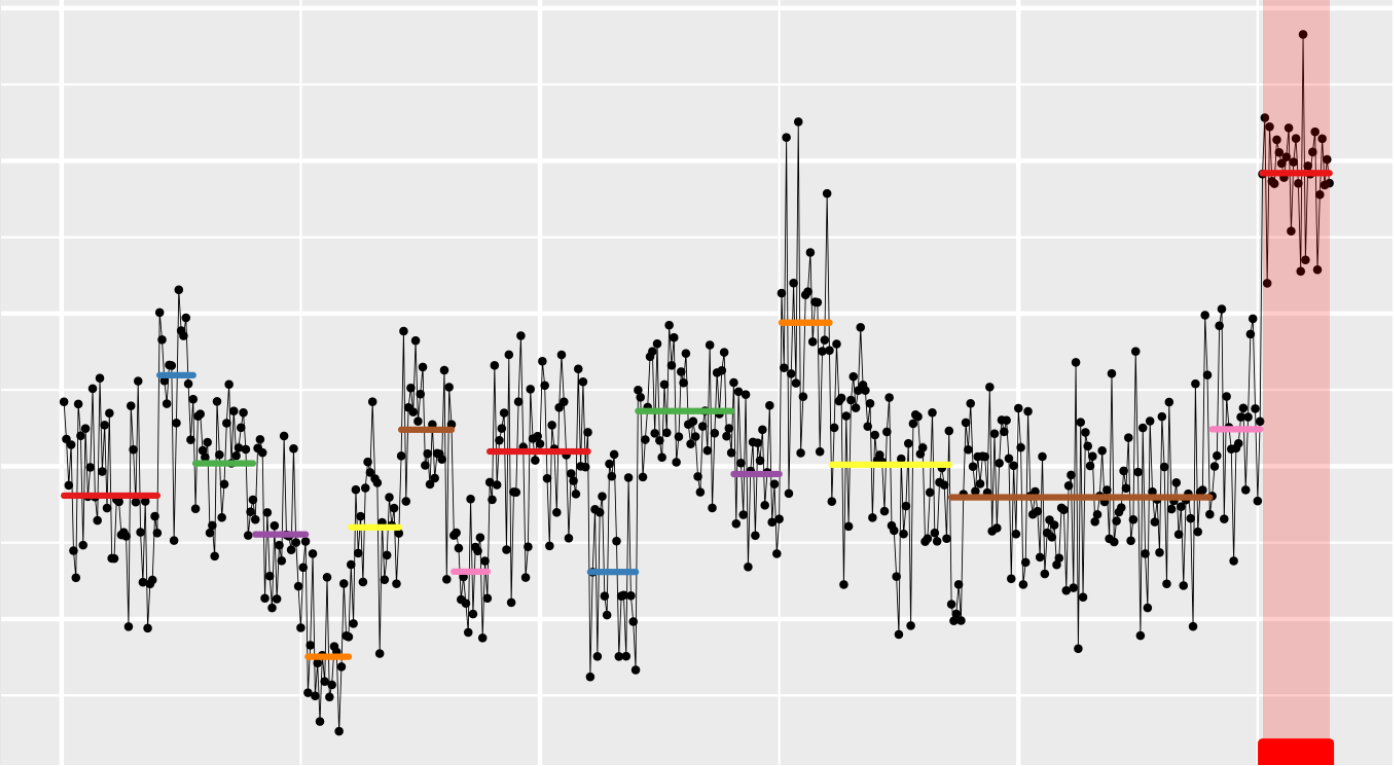
Machine learning models often based on the assumption that data remains stable over time. When the underlying data changes, the model’s precision and reliability may be compromised. Even minor errors can have significant consequences, including damage to equipment, unplanned downtime, or faulty system responses. For reliable operation, it is therefore essential to detect changes quickly and accurately.
At NR, we have extensive expertise in condition monitoring of technical equipment and develop adaptable methods to identify deviations in data streams.
Using sensors that continuously monitor the condition of, for example water turbines or ship engines, our models can detect and alert when systems behave in unexpected or non-typical ways. This enables early identification of potential issues, helps prevent damage, extends the lifespan of equipment and facilitates for more efficient maintenance.
We have experience working with a wide range of data types, including temperature, vibration, and acoustic sensors, as well as measurements of resource usage IT systems. Our solutions can be applied across domains where there is a need to detect changes or identify unusual patterns in data.
Explainable artificial intelligence (XAI)
Artificial intelligence (AI) is used for an increasing number of industrial applications and contributes to more efficient processes. At the same time, it can be challenging to understand how models arrive at a given result. Understanding how models arrive at their results is essential for interpreting and evaluating their outputs.
Explainable AI is a central area of expertise at NR. Through collaboration with industry partners and participation in national priority areas such as TRUST – The Norwegian Centre for Trustworthy AI, we develop methods that provide greater insight into how AI-based systems work.
This is particularly relevant when questions arise such as: Why is the model detecting an anomaly? Which signals influence a prediction? Can we trust that the model will provide reliable recommendations over time?
There are a wide range of methods for interpreting AI-based systems, but not all are equally reliable or useful. To make this landscape easier to navigate, we have developed the decision-support tool eXplego. The tool functions as a digital decision tree and provides interactive guidance in selecting appropriate XAI methods.
Efficient waste management with machine learning
Smart and sustainable waste management requires a good overview and effective planning.
In the ReWaCC project, we develop machine learning models to improve waste handling. The models estimate the contents of waste skips based on sensor data mounted on each unit, providing better insight into waste composition.
Efficient treatment often requires similar types of waste to be handled together. At the same time, limited storage capacity and resources make this challenging in practice. By using sensor data, it becomes possible to plan how waste should be treated next — whether it is sent for incineration, further processing, or recycling — thereby improving overall efficiency.
The aim is to strengthen the knowledge base for increased recycling and better utilisation of secondary raw materials. The solution is being developed as a scalable and flexible system for different types of waste skips.
Transport and logistics
We develop data-driven methods and models for transport and logistics that support better decision-making in planning, operations, and prioritisation. Our work ranges from traffic and passenger forecasting to analyses of freight transport and environmental impact, including situations where data is incomplete.
Through the research centre TRANSPLAN, we contribute to a better understanding of the transport sector’s role in the transition to a low-emission society and develop models that support more sustainable transport systems.
Applications and collaboration
Whether you aim to streamline maintenance work, make more active use of data in operations, or better understand how models work, we can support you with analysis and model development.
Get in touch if you would like to discuss a specific challenge or explore opportunities for collaboration.
Selected projects in technology and industry





Get in touch to learn more about our work in technology and industry.

Our partners include
- ABB
- Acconeer
- AIMS Innovation
- DNV
- Malling & Co
- The Norwegian Water and Energy Directorate (NVE)
- NORSUS
- Ragn-Sells
- Sensorita
- SINTEF Digital
- SoundSensing
- Statkraft
- Veidekke
Explore our focus areas